Early Warning Systems – Under Review
Learn more about our work and the standards development process here.
About
Interoperability between Early Warning Systems (EWS) and Social Protection (SP) systems is essential to ensure that vulnerable populations are identified and supported before shocks escalate into crises. Vulnerability may arise from limited access to healthcare, education, or social services; socioeconomic disadvantage such as poverty or unemployment; marginalization or discrimination; higher exposure to risks including disease, violence, and disasters; or reduced capacity to anticipate, respond to, and recover from shocks.
By systematically linking risk intelligence with response mechanisms, governments can transition from reactive assistance to anticipatory, timely, and well-targeted support that strengthens resilience, protects livelihoods, and promotes inclusion. This requires ensuring accessibility across the physical and built environment, program design and delivery, and equally effective communication channels so that all individuals, including persons with disabilities and other at-risk groups, can access information, services, and support on an equitable basis.
The Early Warning–Social Protection Interface supports governments in moving from siloed monitoring and response toward an integrated, data-driven approach, enabling:
-
Early warning triggers to inform timely social protection actions (e.g., scale-up, vertical expansion, horizontal expansion, or emergency top-ups)
-
Social protection data to enhance risk profiling and vulnerability analysis within early warning systems
-
Faster, more predictable shock response with reduced gaps and duplication
-
Coordinated, anticipatory, and people-centered service delivery
Standards committee
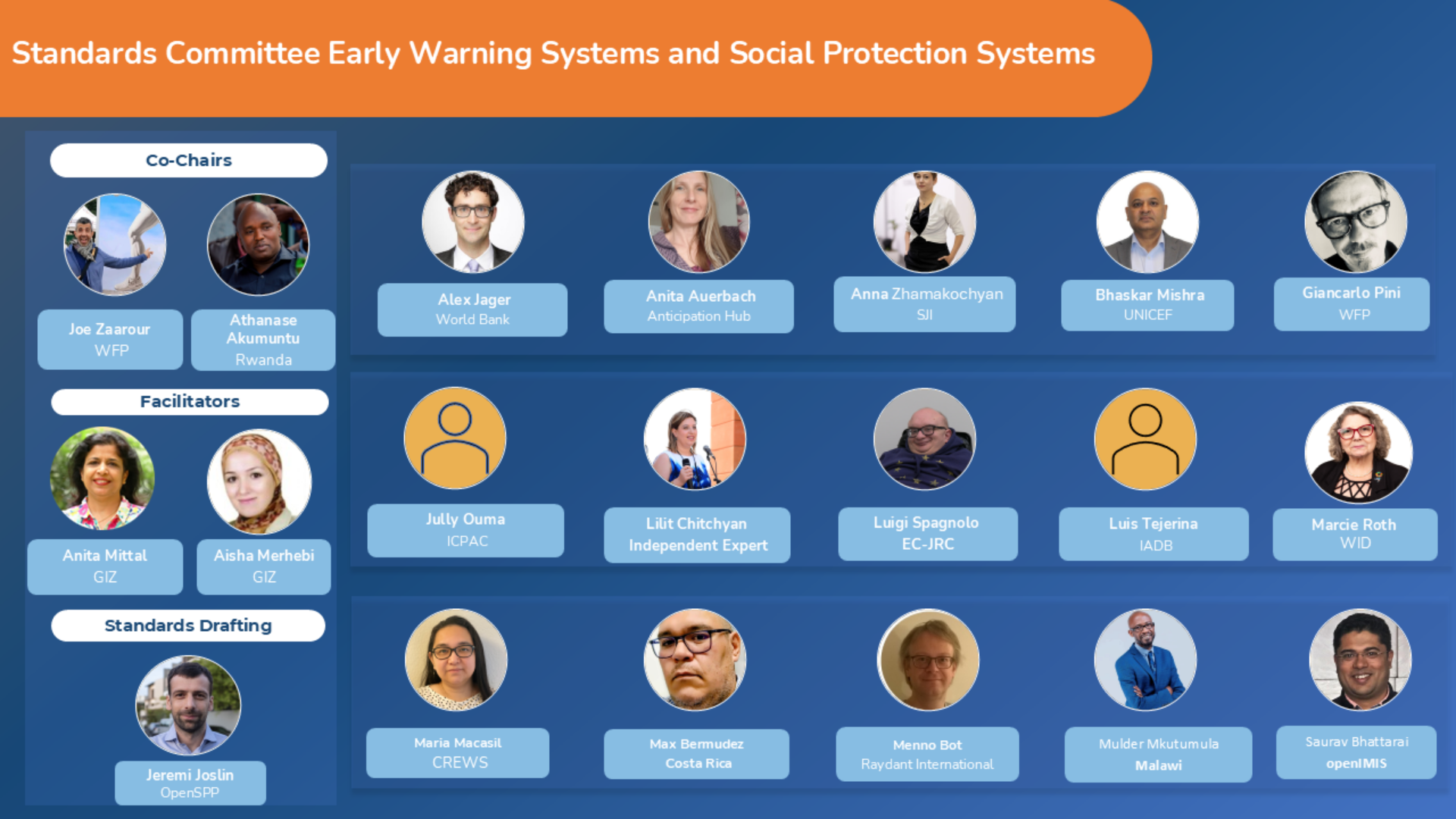
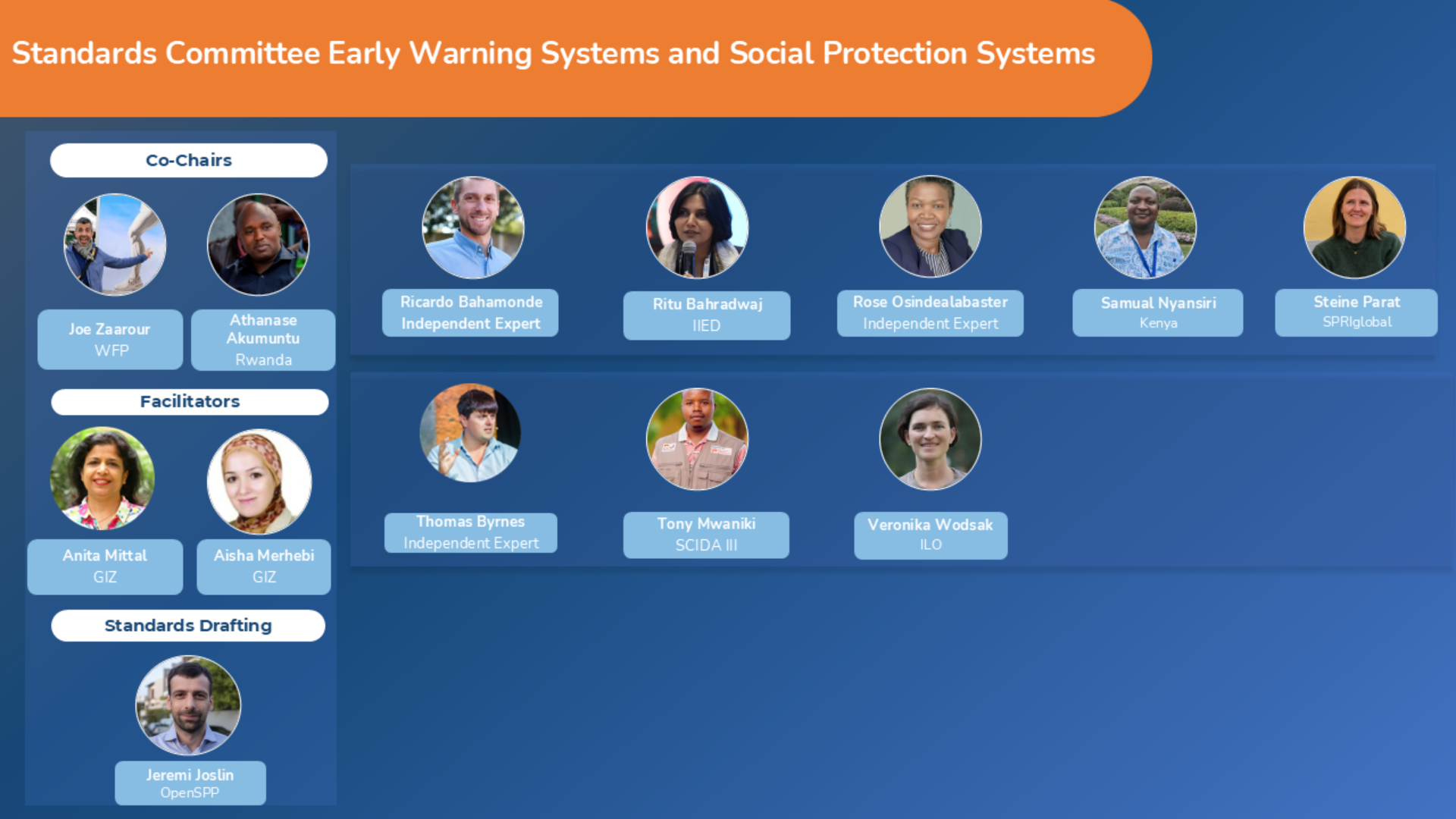
The standards committee for the interoperability of early warning systems and social protection systems was launched in April 2026. The committee brings together 27 experts from 19 diverse organizations including government agencies, international organizations, digital public goods (DPGs), the private sector, and individual specialists.