Employment support systems

© GIZ / Mohammed Bakir

Learn more about our work and the standards development process here.

About

Interoperability between social protection and employment support systems ensures that individuals receive support in times of need, and also provide them with the support necessary to achieve long-term self-sufficiency.

This interface outlines standardized processes, data models, and APIs to link employment support systems with social protection systems. Its main goal is to ensure that individuals receiving social protection support can be systematically guided and supported toward employment programs, while vulnerable employment programs beneficiaries can access social protection when necessary. The standards do not dictate the operational details of either system; instead, they ensure that the required data is securely exchanged in the correct format and that both systems understand the shared information.

The Employment–Social Protection Interface provides a guideline for governments to move from siloed service delivery to an integrated, data-driven approach that supports:

  • Social protection program beneficiaries to be referred to employment support programs
  • Vulnerable employment support beneficiaries to be referred to social protection services
  • Systems operate efficiently with less gaps and duplication
  • Services are delivered in a coordinated, person-centered way

This interface is a practical guide towards realizing the vision of integrated case management, where social protection and employment support programs work together as a seamless continuum of support.

The interoperability standards for employment support systems and social protection systems were endorsed by USP20230 and released on GitBook.

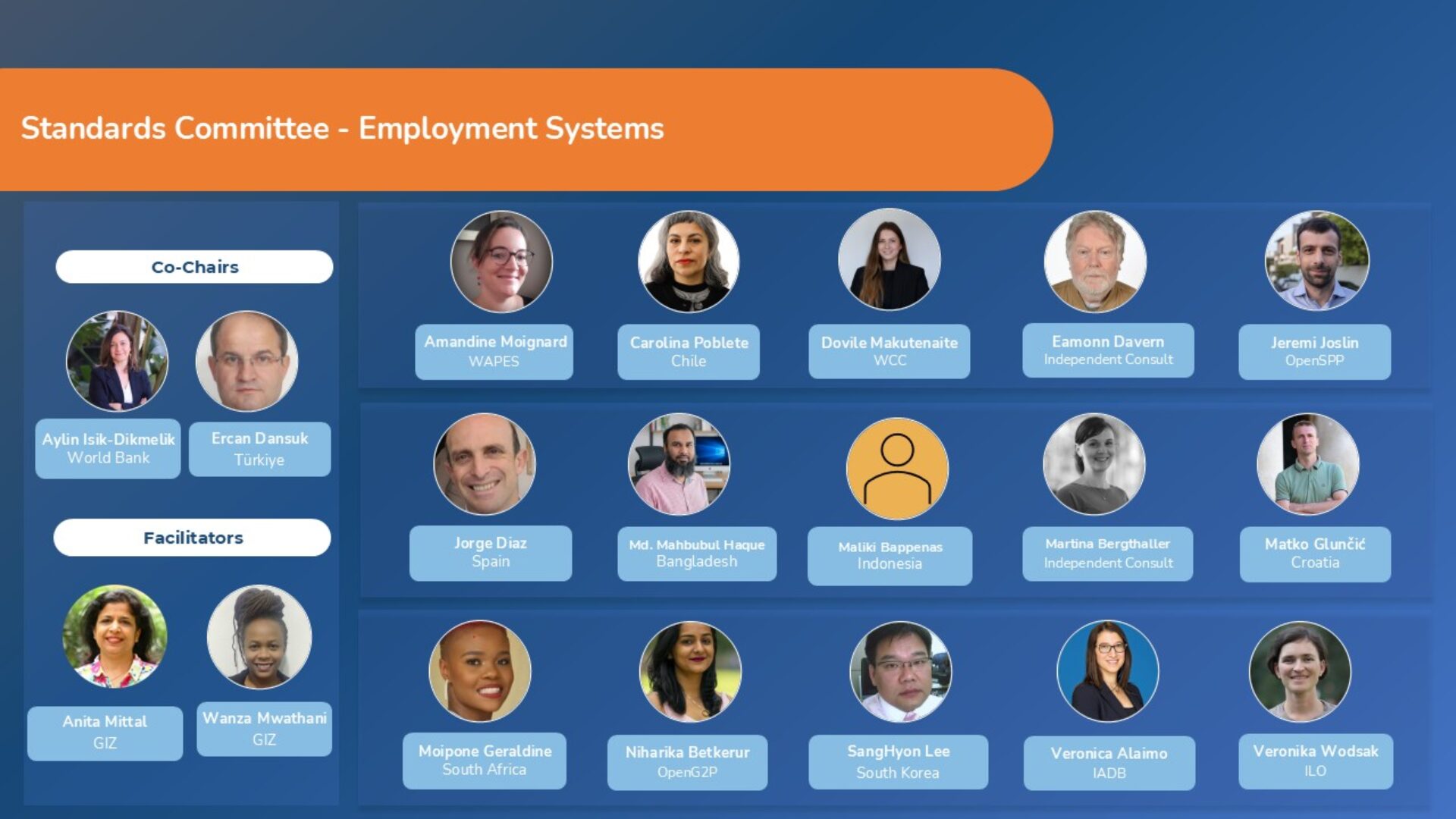
Standards committee

The standards committee for the interoperability of the employment support systems and social protection systems was launched in November 2025. The committee brings together 19 experts from 16 diverse organizations including government agencies, international organizations, digital public goods (DPGs), the private sector, and individual specialists.