Identification systems

Learn more about our work and the standards development process here.
About
ID systems are essential for effective social protection, as they enable accurate identification of individuals, ensuring that benefits reach the right people while preventing duplication and fraud. A strong ID system helps connect data across different sectors like health, education, and payments, making delivery more efficient and transparent. It ensures benefits are portable, even when people move, and plays a big role in reaching vulnerable groups who might otherwise be left out.
In times of crisis, robust ID systems allow rapid targeting and response. Ultimately, they promote inclusion, accountability, and the realization of rights by serving as a gateway to access social protection and related services.
While the structure and content of identification systems vary significantly across countries, the objective of these standards is to provide a practical framework that supports cross-system interaction—without prescribing how ID systems themselves should be built or how they interoperate with non-SP systems.
In doing so, we aim to strengthen the overall digital ecosystem supporting inclusive development, and help governments deliver more efficient, transparent, and equitable services to their populations.
The interoperability standards for ID systems and Social Protection Systems were endorsed by USP20230 and released on DCI GitBook.
Standards committee
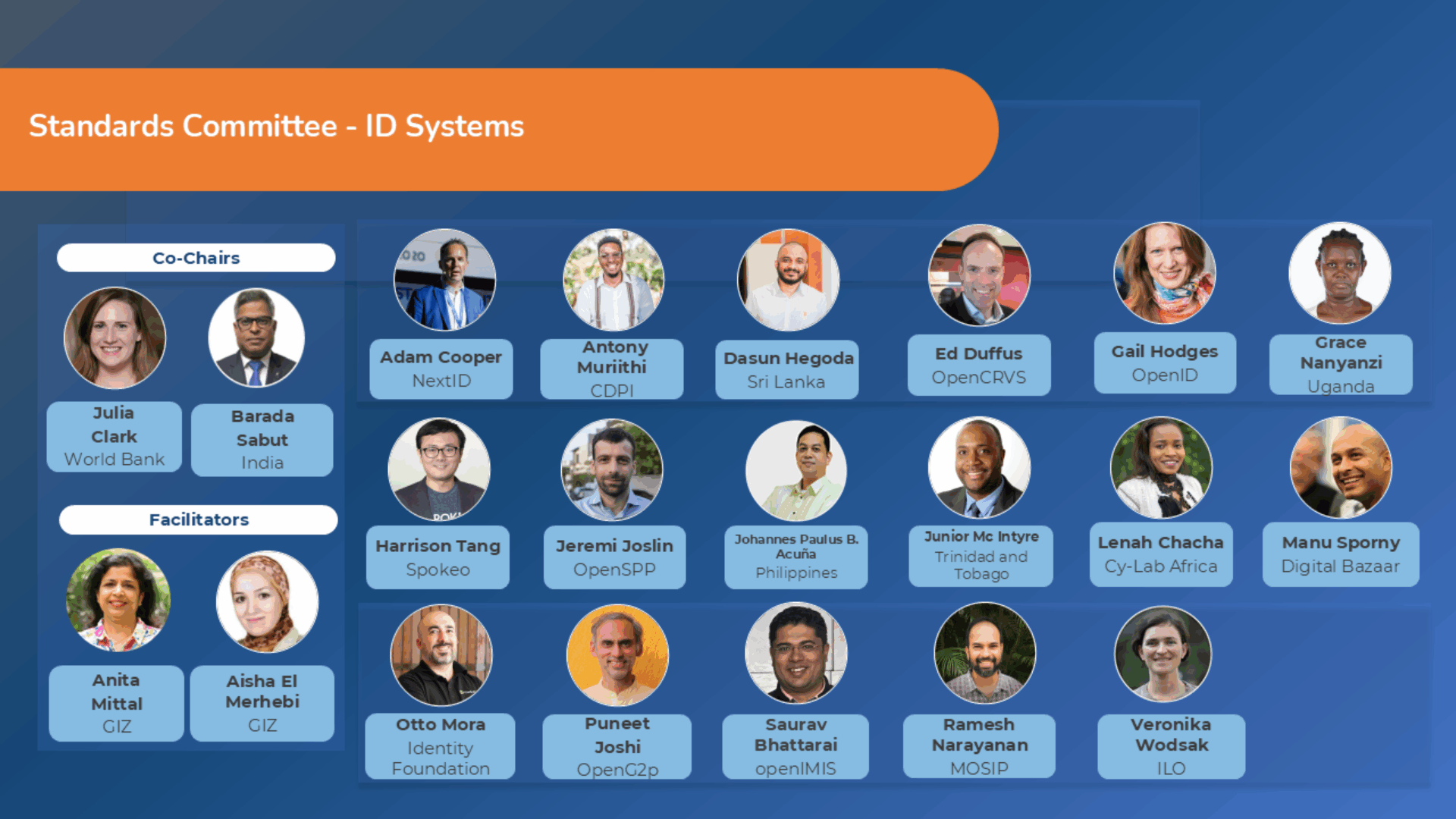
The Standards committee for the interoperability of the ID systems and social protection systems was launched in June 2025. The committee brings together experts from 20 different organizations including government agencies, international organizations, digital public infrastructure (DPI) initiatives, digital public goods (DPGs), the private sector, and individual specialists.