Five years, 150 partner institutions, one shared vision: the DCI’s journey so far
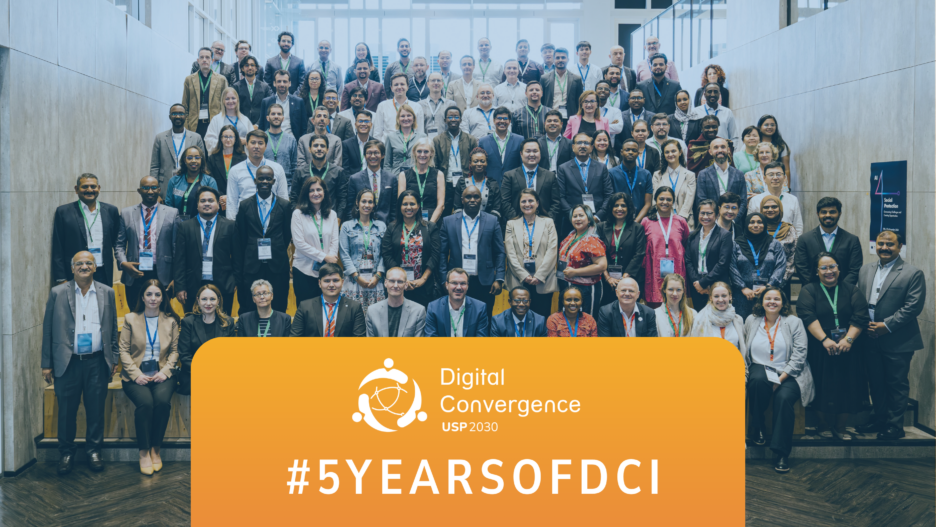
September 2026 marks five years of the Digital Convergence Initiative. The anniversary is both a milestone reached, and a moment for reflection on progress made towards the goal of expanding and enhancing social protection through inclusive, interoperable digital systems.
Back in 2020, governments around the world were working to provide emergency relief to millions of people affected by the socioeconomic impacts of the Covid-19 pandemic. But delivering assistance to people who need it, at scale, is no easy task; in many places, fragmented systems cause duplication, make targeting services difficult, and can mean that eligible people struggle to access support.
Looking at country experiences during this time, a group of international organizations committed to universal social protection focused on how digitalisation could be harnessed to achieve this goal. A working group under the Social Protection Inter-agency Cooperation Board (SPIAC-B) increasingly saw interoperability as a core challenge; if digital systems managing social protection programs could ‘speak’ to each other—the way those in the health sector were increasingly doing —it could be possible to expand social protection coverage, avoid duplicated efforts, and make the process of accessing support simpler for the people that need it.
With an initial aim of jointly developing standards for interoperability in the social protection sector, in September 2021, the Digital Convergence Initiative — at that time, a joint effort of GIZ, World Bank, and ILO — was officially launched.
Drawing on country experiences to develop interoperability standards
The DCI’s work started with a question: what was already working in practice? Many countries had already experienced success in integrating their social protection systems. In 2022, the DCI launched the online dialogue series Talking Interoperability to analyse and share case studies of good practice. ‘The approach was to first learn from countries that had done well. How did they achieve what they had? What challenges did they face?’ says Anita Mittal of GIZ.

This content is from YouTube. To access it, click the button below. Please note that doing so will share data with third-party providers.
More InformationWatch our first instalment of the Talking Interoperability series.
With this learning process underway, work began on the development of interoperability standards for social protection. Interoperability standards provide a common framework for communication between diverse systems by defining how data is formatted and exchanged. Creating this ‘global language’ to be used across systems, countries, and vendors calls for a transparent, multi-stakeholder, consensus-building process. In 2023, the DCI convened its first committee for standards development, bringing together a range of perspectives from academia, government, international bodies, and the private sector. The first set of DCI standards, developed to enable data exchange between social protection systems and civil registries, was approved and officially released in March 2024. Interoperability standards for social registries, integrated beneficiary registries, and more soon followed.
Expansion enables further collaboration across the digital transformation process
As countries continued to share their experiences, and more interoperability standards were developed, the complexities of designing and managing inclusive, human-centred digital social protection systems were becoming increasingly clear. ‘We saw that we needed to broaden our focus,’ says Veronika Wodsak of ILO. ‘We can’t look at interoperability standards in isolation. To effectively support countries, we need to look at the entire digital transformation process, at all its levels.’
In 2024, support from the European Union (EU) and the German Federal Ministry for Economic Cooperation and Development (BMZ) expanded the umbrella of DCI partner organizations, bringing Expertise France and FIAP on board for a ‘Team Europe’ approach, and allowed the initiative to extend its mission. This collaboration reflects the priorities of both the EU and BMZ: digitalization is one of the EU’s Global Gateway priorities, and digital social protection is a key area of focus. ‘The DCI draws upon European values of accessibility, data protection, and open standards, to promote human-centred digitalisation,’ says Chiara Adamo, Acting Director for Human Development of the European Commission’s DG INTPA.
Moreover, the expanding network of DCI institutions also included the strategic partnership with the International Social Security Association (ISSA). ‘DCI serves as a platform to bring together diverse institutions working toward the same goal: the digital transformation of social protection systems,’ says Lars Wilke of BMZ – Head of Unit of Future of Development Policy; Poverty and Inequality. ‘Strengthening countries’ social protection systems promotes resilience, stability, and reduces poverty and inequalities.’
With new resources available, the DCI began offering direct, long-term support to selected partner countries across the digital transformation process, providing technical assistance ranging from diagnostics through to implementation. From the beginning, each collaboration was tailored to the unique challenges and priorities of the national institutions. ‘We draw from real country context. DCI solutions are shaped by what governments really need,’ says Melis Guven of the World Bank Group.

Peru launches the ConectaJuntos mobile application, developed within the framework of the DCI, an innovative digital tool that modernises and simplifies communication between the program and more than 830,000 affiliated households.
Developing capacities for digital transformation in social protection
The initiative also began supporting training and structured peer-learning opportunities for policymakers, programme managers and practitioners across the DCI community. Led by the ILO, these sessions develop the capacities needed to design, oversee and implement inclusive digital transformation. ‘Countries don’t just need a technical solution for strengthening data governance, for example. There is always a need to develop institutional and human capacity to support and sustain change,’ says Veronika Wodsak of ILO.
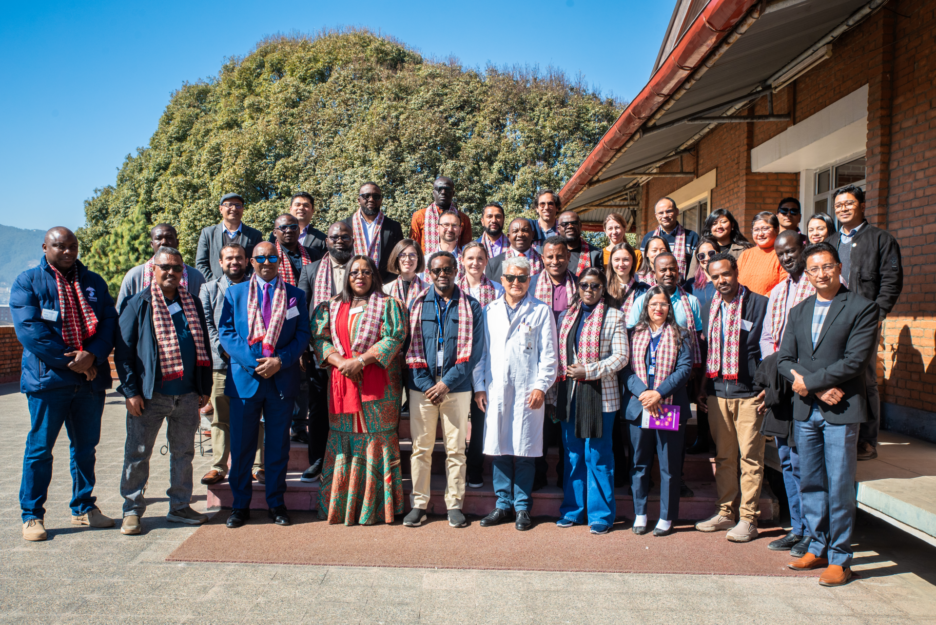
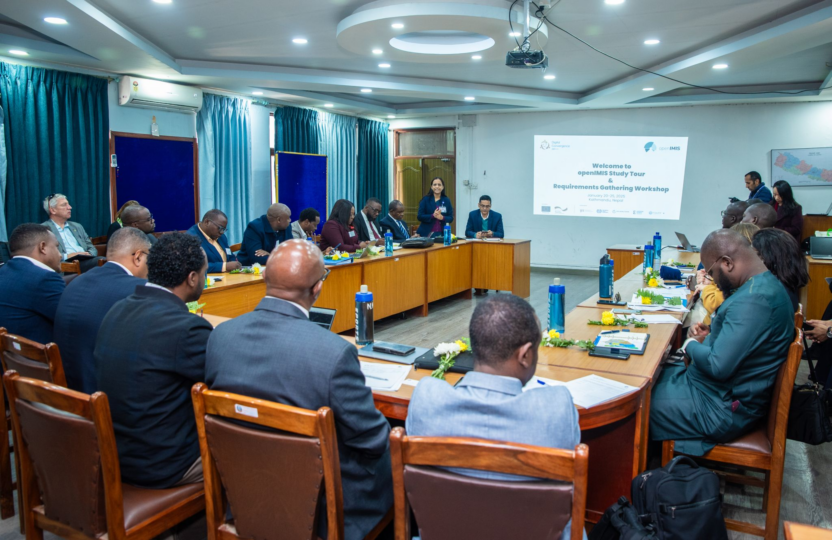
The DCI and other partners* organise a capacity building study visit to Nepal in January 2025.
Supporting the responsible use of AI in Social Protection
As the initiative continued to evolve, so did the challenges and opportunities in digital social protection. In particular, artificial intelligence was increasingly being explored by governments as a means to deliver targeted social protection benefits to more people, often with fewer available resources. But AI use in social protection systems carries significant risks. In 2025, the AI Hub was launched under the DCI to support social protection institutions in developing frameworks and capacities for designing, governing and implementing AI solutions that are ethical and responsible. ‘We are not enthusiasts who want to bring AI into social protection for the sake of technology. But we do believe AI can make an important contribution,’ says Ralf Radermacher of GIZ.
Progress across multiple areas collectively advances the shared goal
Five years since the initial launch, the DCI’s growing community of practice, ongoing evolution, and mutually reinforcing work across different areas have resulted in tangible progress towards the development of inclusive, interoperable digital systems for social protection.
Today, the DCI has released 21 interoperability standards for 7 interfaces. The process of their development has included contributions from over 104 experts from 39 partner institutions and more than 20 countries in total. Six so far have been found compliant with the European Interoperability Framework following the Common Assessment Method for Standards and Specifications (CAMSS), meeting high benchmarks for neutrality, efficiency, and transparency. DCI standards have been adopted by five Digital Public Goods, creating an ecosystem of open-source software that can be connected in different ways. ‘The standards enable a mix-and-match architecture, where you can replace any component without impacting the rest of the social protection delivery chain. They also make building systems more efficient, because the connection to other systems is already defined,’ says Anita Mittal of GIZ.
The adoption of these interoperability standards is one facet of the DCI’s long-term country support, which is ongoing in 21 partner countries. In Peru, for example, the DCI has supported the development of interoperable digital tools to increase inclusion and access for more than 830,000 affiliated households. In Pakistan, the DCI has assisted in the development of an Integrated Beneficiary Registry of 1.2 million people which will allow greater coordination of social assistance. Responding to further demand from an increasing number of countries, a Helpdesk has also been established to provide advisory services on demand. Additionally, online and in-person DCI training has been delivered to participants from over 40 countries, with material made more widely available through a self-paced online learning series.
As countries and institutions make progress in digital transformation, lessons from their experiences feed back into the DCI community, creating a cycle of shared learning and continuous improvement. Implementation experience assists in the continued revision and improvement of technical standards. Insights gained from challenges and successes across the process are shared through online and in-person dialogue, and documented for wider use, adding to the growing number of publications and briefs available on the DCI website.
The DCI community continues to expand, with more contributors and increasing requests for collaboration from governments and institutions. Over the past 5 years, DCI has built up a strong network through partnerships with the private sector and international organisations – especially demonstrated through the quarterly partner forum as a platform for exchanging on digital social protection.
Together, the creation of interoperability standards, country support, capacity development delivery, and a growing knowledge base have contributed to a significantly altered landscape of digital social protection. Governments and institutions working to expand and enhance social protection can build systems more efficiently using interoperability standards, access more extensive knowledge and documentation to inform their decisions, and participate in an active community of practice to connect with others working to solve similar challenges. Ultimately, these advances enable countries to provide better access to more inclusive services for the people who need them.
This content is from YouTube. To access it, click the button below. Please note that doing so will share data with third-party providers.
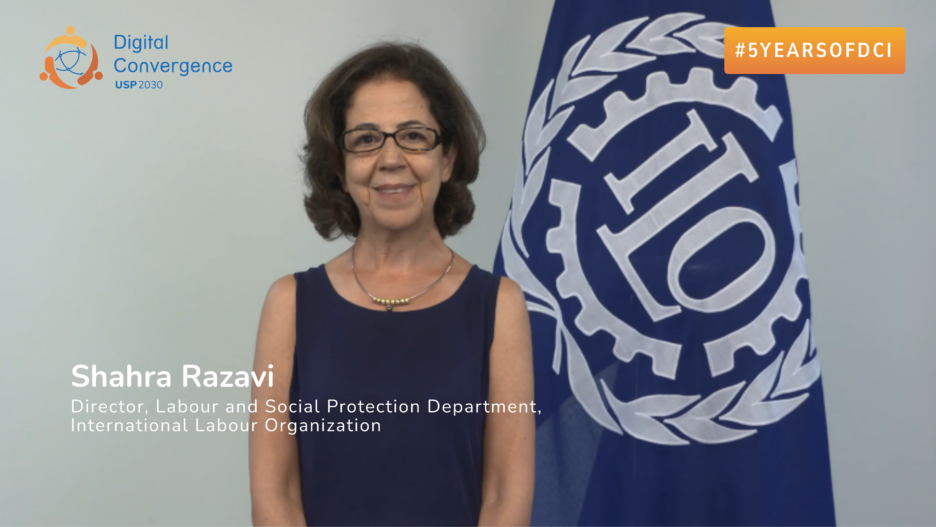
More InformationWatch Shahra Razavi from the International Labour Organization talk about social protection as a human right for DCI’s five year anniversary.
Building on strong foundations to shape the next steps
With many achievements to be celebrated, there remains significant work to be done in ensuring the gains in technical standards and accumulated knowledge of best practice translate into impact within social protection systems in countries around the world.
There is a clear need for continued support to design and manage inclusive, interoperable systems. Having laid the strong foundations of technical standards, collated expertise and experience, and built an active community of practice, the DCI is well placed to provide such support into the future.
Across five years of evolution and growth, the DCI remains a collaboration with a shared vision. ‘Much has changed and evolved since the beginning,’ says Ralf Radermacher of GIZ. ‘But the DCI never stopped being a truly joint endeavour — governments, international organizations, and technical experts building consensus for achieving digital transformation together.’
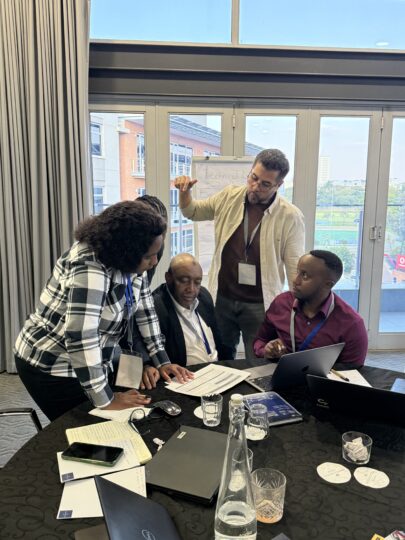
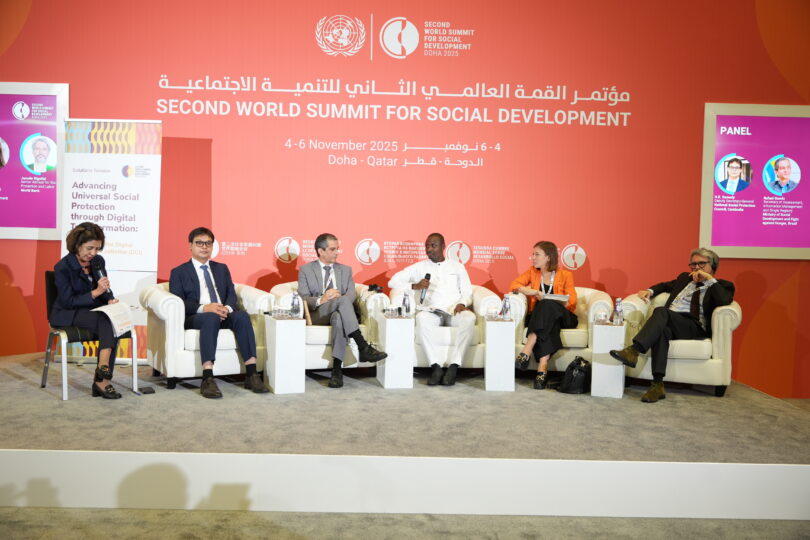
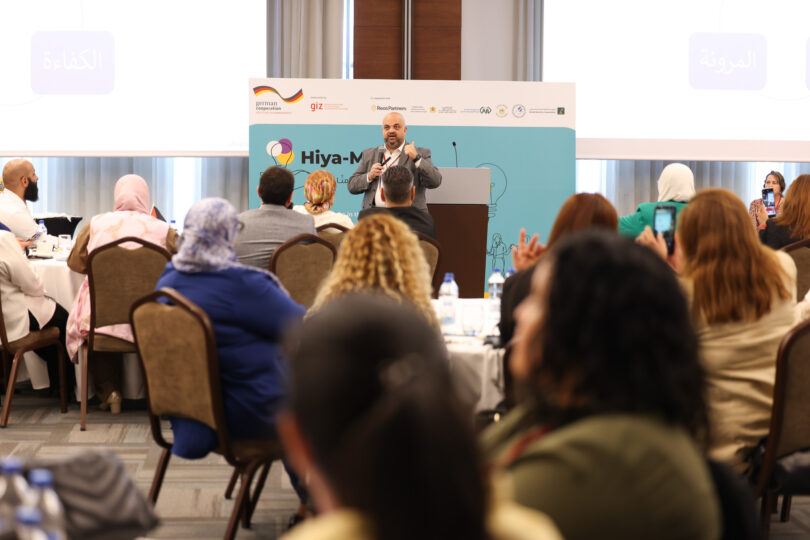
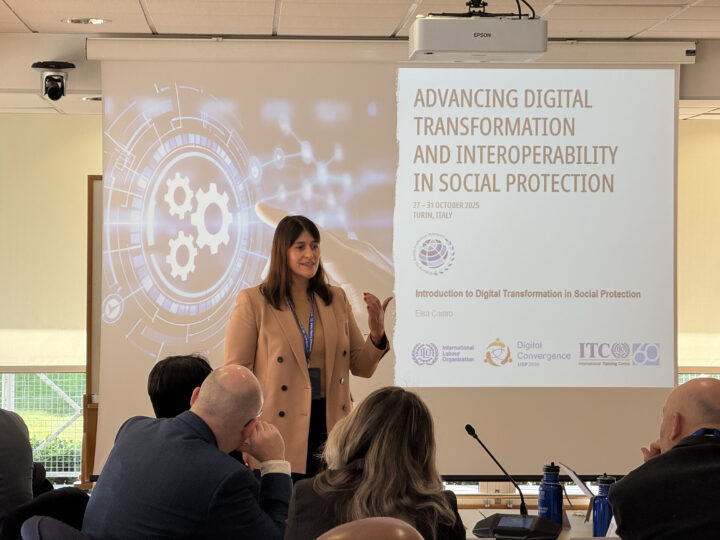
A glimpse of our international engagements through the years






Author: Ellen Harris