Seven DCI standards assessed as compliant with the EIF
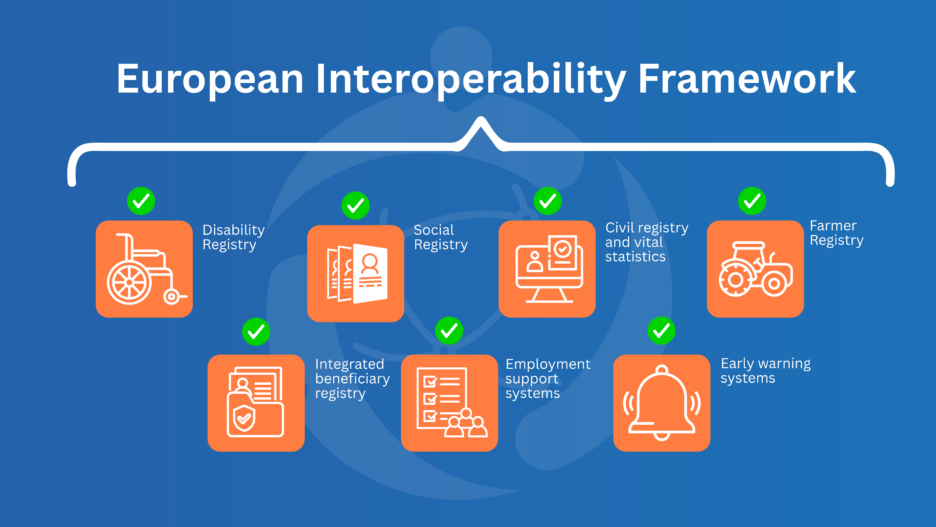
The Digital Convergence Initiative (DCI) is pleased to announce that seven interoperability standards are now compliant with the principles of the European Interoperability Framework (EIF), the latest in the catalogue being our Early Warning Systems interoperability standards.
These standards are:
- civil registry and vital statistics
- integrated beneficiary registry
- social registry
- disability registry
- farmer registry
- employment support systems
- early warning systems
Each standard was independently assessed using the European Commission’s Common Assessment Method for Standards and Specifications (CAMSS), through the CAMSS Assessment EIF Scenario.
The assessments mark an important step in demonstrating alignment with the EIF principles. Their inclusion in the EIF library increases the visibility of the standards and supports countries considering their adoption for social protection systems.
The assessment confirms that DCI’s interoperability standards meet high international benchmarks to achieve:
- neutrality, by avoiding vendor lock-in through unbiased and open technical specifications;
- transparency, through reusable, open, and trusted data models;
- efficiency, by enabling seamless data exchange through APIs that support improved service delivery.
Learn more:
Content review of CRVS and SP-MIS carried out by the CAMSS Team
CAMSS Assessment of Disability registry – EIF Scenario
CAMSS Assessment of Integrated beneficiary registry – EIF Scenario
But what does this milestone mean for the interoperability standards in practice? Anita Mittal, DCI Component Lead at Deutsche Gesellschaft für Internationale Zusammenarbeit (GIZ) GmbH, explains in the video below.
This content is from YouTube. To access it, click the button below. Please note that doing so will share data with third-party providers.
More Information