Newsletter – June 2026
Welcome to our quarterly newsletter! Inside, you’ll learn about recent and upcoming events, latest blogs and publications, and opportunities from the Digital Convergence Initiative.
Subscribe to continue receiving updates from us.
Highlights
New video: How DCI is expanding social protection worldwide through digital transformation
Watch this video to learn more about DCI’s work on the digital transformation of social protection systems.

This content is from YouTube. To access it, click the button below. Please note that doing so will share data with third-party providers.
More InformationDCI Partner forum
The second DCI Partner Forum took place on May 28, 2026, bringing together over 40 people from different organisations working on digital social protection worldwide. This session had an input from the OECD about the current and emerging uses of AI in social protection, public perceptions of AI in this field, and country approaches to AI innovation and implementation. Additionally, Raphaël Duteau from Employment and Social Development Canada (ESDC) shared ESDC’s current approach to the adoption process for new AI solutions. Read more information here about the DCI Partner Forum and send a message to contact@spdci.org if you would like to join the upcoming session.
Recent blogs

Lessons from EU, MERCOSUR, and ASEAN: Making social security portable across borders
As international migration continues to grow, ensuring that workers can retain and access their social security rights across borders has become an increasingly important challenge. This blog explores how different regions—including the European Union, MERCOSUR, and ASEAN—are approaching the portability of social security entitlements. Drawing on findings from recent research, the article examines the legal, institutional, and digital foundations needed to make portability a reality, while highlighting lessons and good practices that can help strengthen social protection for migrant workers worldwide. Read the blog here.

Beyond technical standards: policy, governance, and design for interoperability
Achieving interoperability in social protection requires more than technical standards. In this insightful blog, Wanza Mwathani explores how effective governance, clear legal frameworks, and strategic programme design are essential for connecting social protection systems and improving service delivery. The article highlights the importance of establishing the “rules of the road” for data sharing, fostering collaboration across institutions, and aligning policy and technical efforts to build more efficient, inclusive, and user-centred social protection systems. Read the full blog here.
Knowledge products
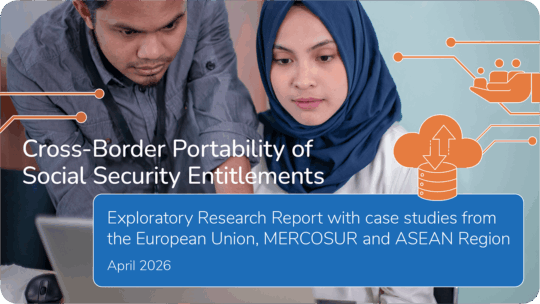
Cross-border portability of social security entitlements
How can social security rights follow people across borders in an increasingly mobile world? This new publication examines the barriers and opportunities for making social security entitlements portable across countries, with a particular focus on the role of digital interoperability. Drawing on comparative case studies from the European Union, MERCOSUR, and ASEAN, the report explores how legal frameworks, institutional coordination, and digital systems can work together to support migrant workers in accessing and preserving their social security rights. Download the publication here.
Have you found our knowledge products useful? We would love to hear your feedback! Fill out our short survey or e-mail us at contact@spdci.org.
Technical standards
Employment support systems interoperability standards released and endorsed by USP2030
Employment support systems play a key role in connecting individuals to labour market services and active employment measures, helping to improve access to opportunities and more effective delivery of social protection programmes. These standards provide a practical framework to enable interoperability across systems involved in employment services, allowing different platforms to exchange and use relevant data in a consistent way. Access the standards here.
Early warning systems standards committee launched
The committee was launched in April 2026, bringing together 19 experts from 17 diverse organisations including government agencies, international organizations, digital public goods (DPGs), the private sector, and individual specialists. The committee will embark on the crucial task of reviewing draft standards to build consensus.
Why are Early Warning Systems standards important? Integrating early warning systems with social protection systems strengthens preparedness, responsiveness, and resilience to shocks. It enables timely data sharing, supports anticipatory action, and facilitates rapid, targeted assistance when risks emerge.
Events on interoperability standards
Standards driven interoperability: Unlocking the power of integrated digital ecosystems
This event convened experts and practitioners to explore how shared standards can enable more connected and effective digital public infrastructure. The discussion highlighted the critical role of interoperability frameworks in breaking down institutional silos and improving the delivery of social protection and other public services. Participants examined how standards-based approaches can support integrated digital ecosystems that are scalable, inclusive, and secure, while also sharing practical experiences from ongoing implementation efforts across regions. The English, French, Spanish, and Portuguese recordings are available here.
Country support
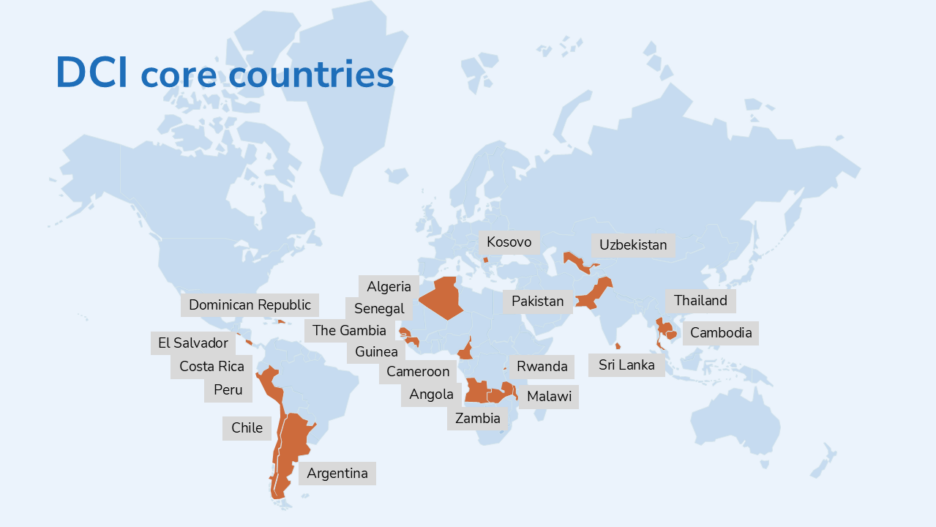
Country focus: Costa Rica

Strengthening Costa Rica’s digital social protection system
Costa Rica’s social protection platform, the National Information System and Single Registry of State Beneficiaries (SINIRUBE), is set to be strengthened through support from the Digital Convergence Initiative (DCI). SINIRUBE serves as a centralised technological platform that integrates data on individuals who receive or may require state social assistance. After conducting an assessment to determine SINIRUBE’s interoperability, the Ministry of Science, Innovation, Technology and Telecommunications (MICITT), recommended the development of a Master Plan to enhance interoperability. To support implementation, MICITT established an international co-operation partnership with DCI’s implementing partner, the Foundation for the Internationalisation of Public Administration (FIAP), which will act as a strategic partner in addressing gaps and advancing the proposed model. Read more.
Capacity development
DCI subregional training in Pretoria, South Africa

From June 1–5, 2026, the ILO, World Bank, and GIZ wrapped up a successful five-day training in Pretoria, South Africa, under the Digital Convergence Initiative (DCI), bringing together 36 policymakers and technical specialists from 12 African countries. The programme covered everything from digital public infrastructure and data governance to change management and digital leadership, equipping participants with practical tools to drive interoperability and inclusion in social protection systems back home. Read more.
Subscribe to our mailing list to receive updates on DCI’s work and events.